Why I Left a 20-Year Healthcare Career to Build a Dementia Screening Company
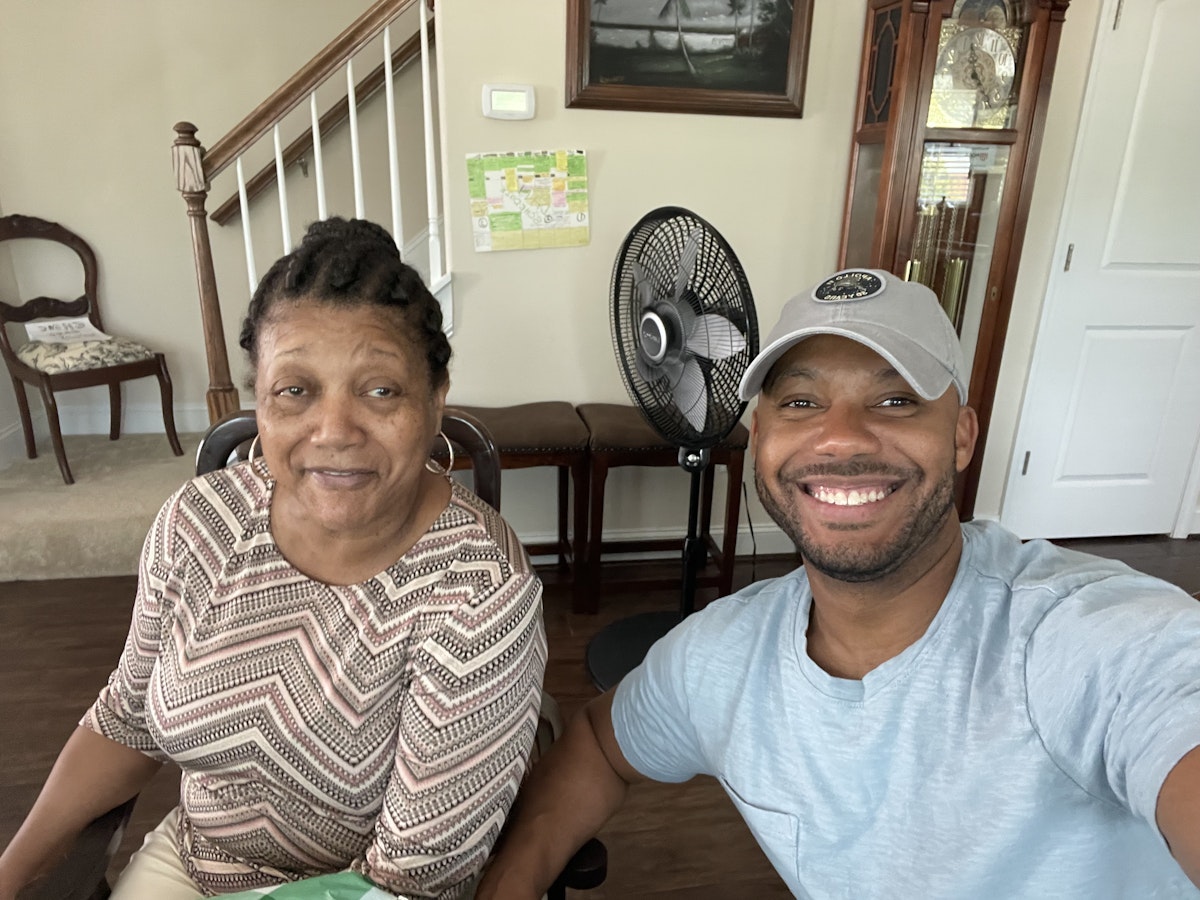
My mother spent her career helping people through the hardest moments of their lives. First as a counselor to Vietnam veterans, then as a high school counselor. She knew how to sit with pain, how to ask the right questions, how to make people feel seen. She was thoughtful, careful with her words, and deeply attuned to others.
So when the small comments started - remarks that were slightly off, a little sharp, out of character, we noticed. She was in her early 60s. We told ourselves it was stress, or aging, or nothing.
We weren't blindsided. My grandfather had died from Alzheimer's about fifteen years earlier. We knew the signs. We were already watching for them, in the back of our minds. But knowing what to look for and being willing to see it are different things. Fear and denial are powerful. And she was sensitive about it, none of us wanted to name what we were afraid of.
Five years passed before she received a formal diagnosis of mild cognitive impairment. She was 65.
The Flyer
Here's what I remember about the day we got the diagnosis: a neurologist, a clinical explanation, and a flyer.
That was it. No social worker. No care navigator. No acknowledgment that he had just fundamentally altered our understanding of my mother's future, and ours. He was a clinician, not a caregiver. And to be fair, he had nothing to offer. The system had nothing for that moment.
We walked out with a piece of paper and a family in freefall. Depression. Anxiety. A thousand questions and no one to answer them. Eventually, years later, we were connected to a volunteer care navigation organization in the health system's network. But by then the damage was done, the window when support would have mattered most had already closed.
The Decade That Followed
That was ten years ago. My mother is now in a hospice house.
For nine of those ten years, my father was her primary caregiver. He was in his mid-60s when this started, a man from a generation that didn't talk about feelings, suddenly navigating a disease that would take everything from the woman he'd spent his life with.
We cycled through care settings. Private Alzheimer's care homes. Attempts to qualify for skilled nursing. She couldn't qualify for Medicare-covered assisted living, and out-of-pocket costs were crushing. Every transition broke something in our family. Every decision was made under pressure, without enough information, with siblings who each brought different perspectives. I was the healthcare executive, my sister the nurse, my brother the eldest trying to hold things together. We fought. We second-guessed. We hurt each other.
My father learned to manage psychiatric medications on-the-fly, trying to balance behavior management against quality of life. The wrong dose and she was a zombie. The right dose and we got more time with her. The calculus was impossible.
The neurologist had suggested a support group. But asking a depressed, overwhelmed 65-year-old man to walk into a room full of strangers and be vulnerable about his situation in real time - that wasn't a realistic solution. It wasn't designed for who he actually was or what he was actually going through.
What might have helped: someone who came to him. A phone call, a video visit. A resource that showed up when things were hard and stepped back when things were calm. Someone who had been through it, who could offer evidence-based guidance that was appropriate to the stage we were in - not a generic flyer, but real support that adapted as the disease progressed.
That resource didn't exist.
What I Realized
I spent more than twenty years in healthcare operations. At DaVita, I watched what comprehensive care could look like for patients going through one of the most difficult chronic conditions imaginable. Dialysis patients didn't just get medical treatment - they got social support, care navigation, a culture that called itself a village and meant it. One of DaVita's core values was fun, which sounds impossible for end-stage renal disease, but they made it real. I saw what happened when you wrapped support around patients and the people caring for them.
At Landmark Health, I watched that model extend into the home - comprehensive, interdisciplinary care for the most vulnerable patients, those managing five or more chronic conditions. It worked. Patients did better. Families did better.
So when my family went through my mother's diagnosis, I recognized what was missing. Not because I had read about comprehensive care models - because I had spent two decades inside organizations that proved they worked.
Dementia had none of it. No village. No interdisciplinary team. No care that came to you. A neurologist, a diagnosis, and a flyer.
The diagnosis gap isn't just a clinical problem - it's a support problem. Screening without care navigation is a dead end. You can't hand someone a diagnosis and a flyer and expect them to figure out the next decade on their own.
And I realized something else: by the time we got my mother's diagnosis, we had already lost critical years. Not just for medical intervention - there was limited treatment for Alzheimer's at that time - but for planning. Financial planning. Legal planning. Family planning. Medicaid has a five-year lookback period; if we had known earlier, my parents could have positioned themselves differently. They could have had more options for her care. We learned about this too late, like most families do.
Early detection isn't just about catching the disease. It's about giving families time to make decisions while they still have choices.
Why I Built CaringAI
I left my career to build the company I wished had existed when my family needed it.
CaringAI Listen is a telephone-based cognitive screening platform. It reaches patients where they are - including the 40% who are rural, homebound, or can't make it to a clinic. It catches cognitive decline early, in the window when planning and intervention are still possible.
CaringAI Act is the care navigation support that should have been waiting for us on the other side of that neurologist's diagnosis. It's the phone call that comes to you. The guidance that adapts to where you are in the journey. The resource my father never got.
This isn't an abstract problem for me. I watched my family break apart over a decade of caregiving. I watched my father try to manage alone what no one should manage alone. I watched the system offer a flyer when what we needed was a lifeline.
And there's a harder truth for the health systems trying to do better: you can't care for patients you haven't identified. Today, the majority of dementia cases go undiagnosed - which means value-based care organizations are managing populations whose true needs are invisible. They're absorbing costs without the risk-adjusted funding to support them. The flyer isn't just failing families. It's failing the economics of care itself.
I'm building the lifeline.
Justin Mason is the CEO and Co-Founder of CaringAI. He can be reached at justin.mason@getcaring.ai.